
Introduction
Pest control services in Marana, Arizona, represent a critical component of urban and rural pest management. These services are integral to protecting public health, agricultural productivity, and environmental integrity. This article delves into the multifaceted role of pest control in Marana, exploring its historical context, current practices, economic implications, technological advancements, regulatory frameworks, and future prospects. Readers will gain a comprehensive understanding of how pest control services operate within this dynamic environment and their significance to the broader ecosystem.
Understanding Pest Control Services Marana
Pest control services in Marana encompass a variety of practices aimed at managing and mitigating the negative effects of pests, which include insects, rodents, birds, and other organisms that can harm human health, crops, structures, or natural habitats. The core components of these services involve inspection, identification, treatment, monitoring, and record-keeping to effectively manage pest populations. Historically, pest control has evolved from simple mechanical means to sophisticated chemical treatments and integrated pest management (IPM) strategies.
Global Impact and Trends
The influence of pest control services extends beyond Marana’s borders, impacting global agricultural yields, urban living standards, and even international trade. Key trends include the shift towards sustainable and eco-friendly pest management solutions, the rise in urban pest infestations due to increased urbanization, and the emergence of pests resistant to traditional control methods. Different regions face unique challenges, from invasive species in North America to crop pests in Asia and Africa.
Economic Considerations
Pest control services contribute significantly to Marana’s economy by protecting agricultural sectors, maintaining public health standards, and ensuring the safety of goods for trade. Market dynamics in this sector are influenced by technological advancements, consumer demand for organic produce, and regulatory changes. Investment patterns reflect a growing interest in innovative pest control solutions that balance efficacy with environmental stewardship.
Technological Advancements
The field of pest control has seen significant technological advancements, from the development of biological pesticides to the use of drones and IoT sensors for monitoring and data collection. These technologies have led to more precise and effective pest management strategies, reduced environmental impact, and enhanced safety for both humans and non-target species. Future potential includes AI-driven predictive analytics for pest outbreaks and gene-editing technologies to engineer crop resistance.
Policy and Regulation
Pest control services in Marana operate under a complex web of policies, regulations, and legislative frameworks that govern the use of pesticides, the handling of hazardous materials, and public health standards. Federal and state regulations set guidelines for licensing, training, and application methods to ensure safety and efficacy. These regulations are critical in driving innovation and best practices within the industry.
Challenges and Criticisms
The pest control industry faces several challenges, including resistance from pests to chemical treatments, environmental concerns over the use of pesticides, and public skepticism about the safety and necessity of certain pest control measures. To address these issues, the industry must invest in research and development, community outreach, and sustainable practices that align with environmental and public health objectives.
Case Studies
Several case studies from Marana highlight successful applications of pest control services. One such example is the effective management of desert locust populations through a combination of biological control agents, which has implications for food security in arid regions. Another case study demonstrates the integration of beneficial insects into agricultural systems to reduce dependency on chemical pesticides.
Future Prospects
The future of pest control services in Marana is poised for growth and innovation, with potential expansion into new markets and the development of cutting-edge technologies. Emerging trends include the use of biopesticides, enhanced environmental stewardship, and a greater emphasis on integrating traditional and modern pest management practices. Strategic considerations will focus on adapting to climate change, managing pest populations sustainably, and ensuring food safety for a growing global population.
Conclusion
Pest control services in Marana play a vital role in maintaining the health and productivity of its communities and landscapes. Through understanding its core components, global impact, economic considerations, technological advancements, policy frameworks, and future prospects, we can appreciate the depth and breadth of this industry’s significance. The continued evolution of pest control services will undoubtedly shape the environmental, economic, and social landscape of Marana for years to come.
FAQ Section
-
What are pest control services? Pest control services include a variety of practices aimed at managing pests through inspection, identification, treatment, monitoring, and record-keeping to protect public health, agricultural productivity, and the environment.
-
Why is pest control important in Marana? Pest control is crucial for preventing the spread of diseases, protecting crops from damage, preserving structures from deterioration, and maintaining ecological balance.
-
What are some common pests in Marana? Common pests include rodents like rats and mice, insects such as cockroaches, ants, termites, and mosquitoes, and weeds that can affect both urban and agricultural environments.
-
How do pest control services impact the global economy? Pest control services help to prevent crop losses, ensure food safety for international trade, protect public health standards, and reduce the economic burden of pest-related damage to infrastructure.
-
What are some sustainable pest management practices? Sustainable practices include biological control, integrated pest management (IPM), use of organic or biopesticides, habitat modification, and monitoring for early detection of pests.
-
Are there any regulations governing pest control services in Marana? Yes, federal and state regulations govern the licensing, training, and application methods of pest control services to ensure safety and efficacy in protecting public health and the environment.
-
How can I choose a reputable pest control service in Marana? Look for licensed and certified professionals with positive reviews or recommendations, who use eco-friendly practices and follow the latest industry standards.
Marana gardens thrive with sustainable pest control services Tucson naturally offers. Emphasizing biodiversity and natural solutions, these practices minimize ecological impact while controlling pests effectively. Key methods include biological controls, plant-based repellents, and organic compounds like neem oil. Homeowners cultivate diverse native species, monitor infestations early, and seek expert advice from local gardening groups and cooperative extensions for integrated pest management (IPM) tailored to Tucson's unique climate.
In the pursuit of harmonious coexistence with nature, sustainable and eco-conscious pest control practices have emerged as a vital component for Marana garden enthusiasts. As awareness grows regarding the environmental impact of traditional pest management, there is a pressing need for innovative solutions tailored to Arizona’s unique ecosystem. This article delves into the world of natural pest control services Tucson residents can rely on to protect their gardens without compromising ecological balance. We explore practical strategies and methods that offer both effectiveness and environmental stewardship, ensuring a healthier, more vibrant Marana landscape.
Understanding Eco-Conscious Pest Management in Marana Gardens

In Marana gardens, adopting sustainable and eco-conscious pest control practices is not just a trend but an essential strategy for maintaining a harmonious environment. This approach recognizes the intricate web of relationships between plants, insects, and their ecosystems, aiming to minimize the ecological footprint while effectively managing pests. Understanding this philosophy is crucial in the context of Tucson’s unique ecosystem, where natural solutions are both practical and aesthetically pleasing.
Eco-conscious pest management involves employing non-toxic, environmentally friendly methods that avoid synthetic chemicals. Marana residents and local pest control services Tucson naturally emphasize biological controls, such as introducing beneficial insects like lacewings and ladybugs to combat specific pests. For example, these predators can effectively reduce populations of aphids, mealybugs, and scale insects without causing harm to non-target species or the environment. Additionally, using plant-based repellents, essential oils, and organic pesticides offers a safe alternative to conventional options. A case study from the University of Arizona revealed that neem oil, derived from the neem tree, is highly effective against various pests while being non-toxic to birds, beneficial insects, and mammals.
Implementing sustainable practices requires proactive measures and knowledge. Homeowners can cultivate diverse plant species, ensuring a balanced ecosystem that supports natural predators. Regular monitoring and early detection of pest infestations are key. For instance, establishing a healthy garden with native plants encourages native pollinators and predaceous animals, naturally keeping pests in check. When necessary, organic pest control services Tucson naturally provides offer specialized knowledge and tools, ensuring minimal environmental impact while achieving robust pest management. This holistic approach not only preserves the beauty of Marana gardens but also contributes to the region’s overall ecological health.
Implementing Sustainable Practices: A Guide for Tucson Residents
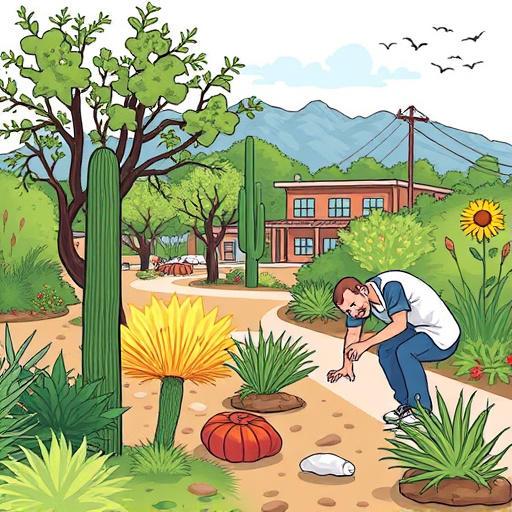
In the pursuit of sustainable living, Marana residents increasingly seek eco-conscious solutions for their garden pest control needs. Tucson, with its unique climate and biodiversity, requires tailored approaches to managing pests while preserving the local ecosystem. This section provides an in-depth guide on implementing sustainable pest control practices, focusing on strategies that harmonize with nature rather than against it.
One of the foundational steps is adopting integrated pest management (IPM) principles. IPM encourages prevention and the use of least-toxic methods first, such as physical removal, beneficial insects, and plant resistance. For instance, marigolds and lavender not only attract pollinators but also naturally repel pests like aphids and nematodes. Tucson residents can also encourage natural predators like ladybugs and lacewings by planting diverse native flora, which provides habitat and food sources year-round.
Transitioning from traditional chemical pesticides to eco-friendly alternatives is another crucial shift. Pest control services Tucson naturally emphasizes organic compounds like neem oil, pyrethrum, and essential oils from plants like peppermint and clove. These substances are effective against various pests while being less toxic to non-target species, including beneficial insects and local wildlife. Data from the University of Arizona shows that organic pest management can reduce chemical use by up to 80%, significantly decreasing environmental pollution and potential health risks.
Community education and collaboration play vital roles in sustaining these practices. Local gardening groups and cooperative extensions offer workshops on identifying pests naturally, sharing successful strategies, and promoting a culture of eco-consciousness. Residents can also participate in citizen science programs that track pest populations, helping to refine IPM plans for the entire community. By working together, Tucson residents can ensure their gardens remain vibrant and healthy while minimizing the environmental footprint of pest control efforts.
By adopting sustainable and eco-conscious pest control practices, Marana residents can protect their gardens while preserving the local ecosystem. This article has provided a comprehensive guide, highlighting the importance of understanding ecological interactions within Marana’s unique environment. Implementing natural methods, such as promoting beneficial insects and utilizing organic repellents, offers an effective alternative to traditional pest control services Tucson may promote. Key takeaways include recognizing the value of integrated pest management, choosing non-toxic solutions, and fostering a balanced garden ecosystem. Moving forward, Tucson residents can take practical steps by selecting native plant species resistant to pests, regularly inspecting their gardens, and collaborating with local experts to develop tailored, sustainable strategies for optimal garden health.